



Visualization is powerful. In the transition of electricity network companies from DNO to DSO, it is not just about technology – it is about creating an organization driven by reliable data and shared insights. The foundation is built on structured and quality-assured information but it is only when data becomes visible and understandable that it gains real value. A well-designed dashboard does exactly that: it opens a window into your operations, clarifies relationships, and helps you make faster and better decisions, identify deviations early, and communicate operational status both internally and externally.
At Digpro, we offer both proprietary dashboard solutions and the ability to connect data to external BI tools. Regardless of the technical approach, the fundamental prerequisites remain the same: without clear direction and alignment, visualizations risk becoming surface without substance.
Dashboard – an enabler, not a goal
Our experience is clear: customers who gain real value from dashboards have one thing in common – they have thought through three key questions before getting started:
- What should we visualize, and why?
Is the goal to monitor maintenance, analyze outages, track investments, or display the status of permitting processes? With clear use cases, dashboards become effective tools for analysis, prioritization, and decision-making. - Who is the audience, and what should they do?
An operations manager has different needs than a strategic planner. It is crucial to know who is looking at the metrics—and who is responsible for acting when something deviates. - How do we know what we see is correct?
Visualizing poor-quality data can create a false sense of security. Data quality must therefore be prioritized before you start building dashboards.
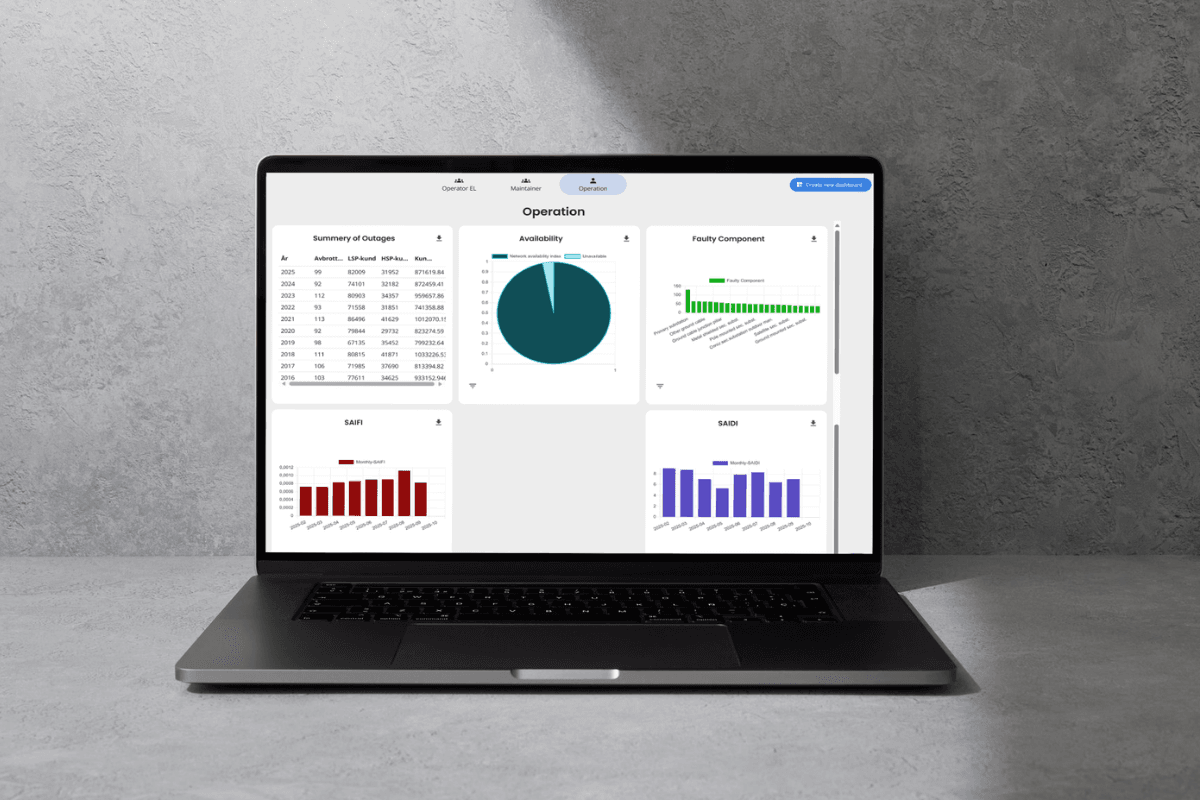
A well-designed dashboard makes relationships clear and helps you make faster and better decisions.
Data quality: start with what you can trust
A common pitfall is trying to visualize “everything” at once—regardless of whether the data has been validated. Building dashboards on unreliable data quickly leads to incorrect insights. Unvalidated metrics risk leading to poor decisions or inaction (“we can’t trust the numbers anyway”). That is why our clear recommendation is:
- Start with what you know you can trust.
- Invest time in validating your key metrics. Ensure there is a clear source, ownership, and verification process.
- Assign data quality ownership.
Who is responsible for ensuring the data is correct—every day, every month? - Build dashboards step by step.
Start small with a few reliable indicators, and expand over time.
Prerequisites for success
For a dashboard solution to deliver real value, certain fundamentals must be in place:
- A clear owner who understands which KPIs matter, and why
- Organizational responsibility for both data quality and follow-up on deviations
- Follow-up processes that define how and when to act on what the dashboard shows
- Users who understand the purpose, so the information is not just observed, but used
Dashboard = mirror
A dashboard reflects the information you feed it. It reflects—but does not act. It alerts—but does not fix. It is only as valuable as the structure behind it.
So the next time someone says, “we need a dashboard,” ask the follow-up questions:
What for? For whom? Based on what data? Who follows up?
With those answers in place, we can help you build something that truly makes a difference.
In our article series The data-driven power grid, we take a closer look at five critical tools on the journey towards DSO:
- From DNO – DSO – A journey that requires more than technology
- Data warehouse – Building the foundation with a Data Warehouse
- Dashboards – Visualizing information with a clear purpose
- KPIs – Managing by facts, not gut feeling
- Capacity planning – Planning for both operations and development
- Forecasts – Making decisions with the future in mind
We share practical advice, highlight common pitfalls and show how you can move forward – no matter where you are today.
Welcome to join the journey.
 Meet the expert
Erling Gustafsson has a solid background in the electricity industry and has supported many companies on their digitalization journeys. He is also the author of the Swedish book “Innovation och utmaningar i ett nytt energisystem: En guide för en proaktiv elnätverksamhet” (Eng.: “Innovation and Challenges in a New Energy System: A Guide for Proactive Grid Operations.”)